An Industry’s Uneven Growth
When Runje Shaw, Zhang Shichuan and Zheng Zhengqiu rented a theatre in Shanghai’s French Concession in 1922, they used it for stage performances as well as film screenings. In the early days of Chinese cinema, this closeness between stage and screen seemed natural. The new medium attracted entrepreneurs and photographers, but for many of its pioneers the theatre was still where they first learnt to tell stories.1
At the turn of the twentieth century, a new kind of drama developed alongside Peking opera and numerous regional opera traditions. It was known as xinxi, or in its early form as wenmingxi, meaning ‘civilised drama’. Many of the new plays drew young people to the theatre because they dealt with the problems and customs of their own day. Howerver, Western forms did not always take a direct route to the Chinese stage; one path led through Japan. In 1907, Chinese students from the Spring Willow Society (Chunliu she) staged an adaptation of Uncle Tom’s Cabin in Tokyo. They also took an interest in shinpa, a form of theatre known for melodramas about love and family disputes in contemporary Japan. They later combined the acting and staging techniques they had encountered there with Chinese conventions. There was thus room on the wenmingxi stage for melodrama, improvisation and song, and men also performed in women’s roles.2
Zheng Zhengqiu, one of the founding figures of Chinese cinema, began as a critic of Peking opera. He went on to write, direct and perform in the new plays before turning to film. In 1925, he pointed out a difference that was not yet obvious: on stage, a gesture has to be clear even from the back of the auditorium, whereas a furrowed brow is enough in a film close-up, and even a slightly emphatic smile can look overdone. Theatre experience helped ease the transition to the film set, but filmmakers still had to work out afresh what the audience would actually see.3
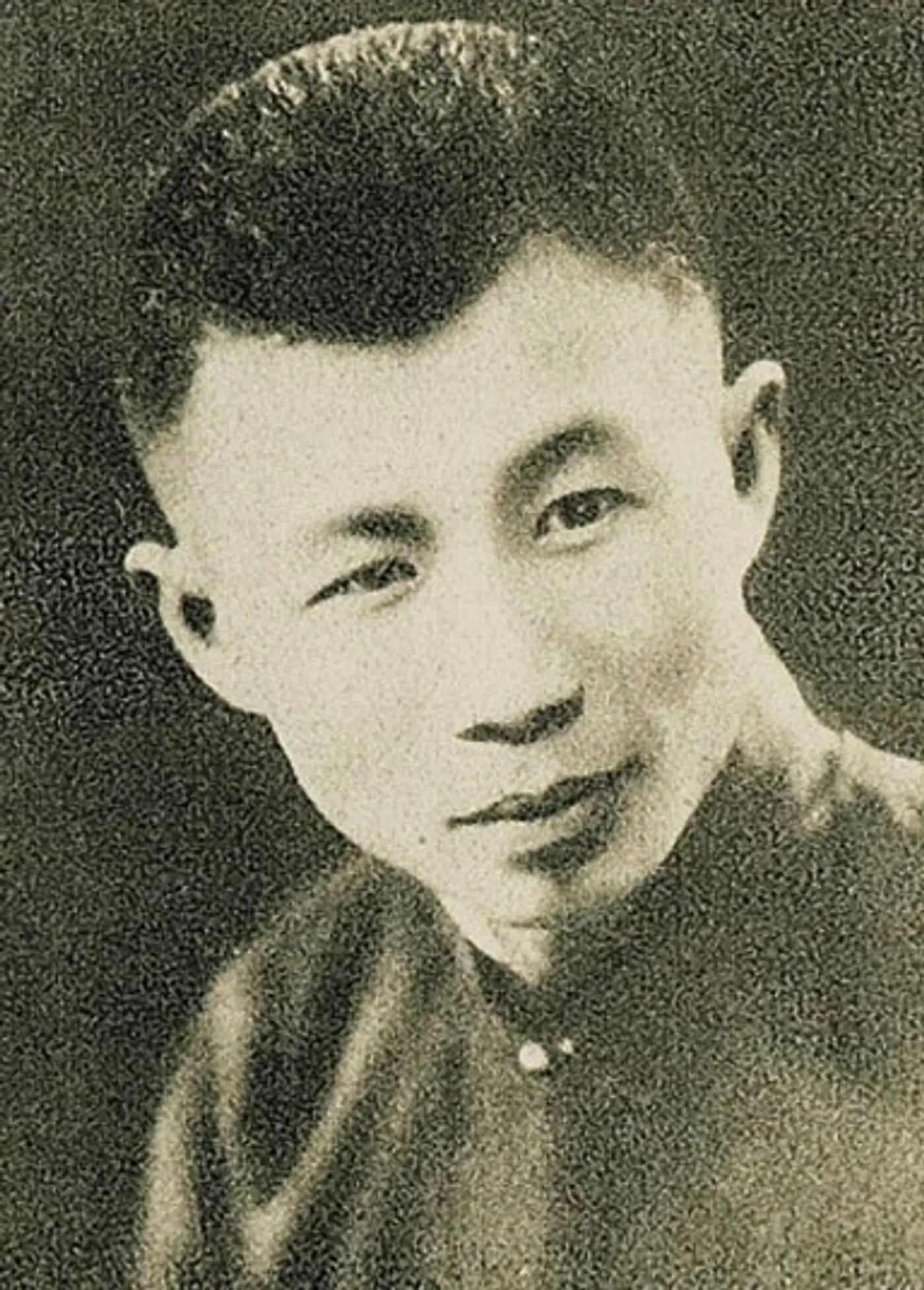
Runje Shaw (Shao Zuiweng) also moved from theatre to film production. In June 1925, he and his brothers founded the Tianyi studio, which he ran and where he directed films himself. His career shows how varied the aims of the new medium could be. Shaw had staged wenmingxi, but Tianyi’s chief aim was to promote Chinese culture and traditional morality. Its repertoire thus included adaptations of Chinese literature and folk tales, among them the story of Meng Jiangnü.
Attracting capital to filmmaking and persuading people to appear in front of the camera, however, were two different matters. Some studio owners, directors and screenwriters came from affluent homes, while performers were more often recruited from poorer backgrounds. Families concerned with their reputation often saw acting as beneath their social standing. Women who performed in public were particularly easy to stigmatise. In popular opinion, actresses were lumped together with dancers in entertainment venues and prostitutes. At the same time, the most famous opera performers, such as Mei Lanfang, enjoyed great prestige and were regarded as representatives of Chinese culture. Paradoxically, admiration for a particular artist often coexisted with contempt for the profession.4
Similar prejudices surfaced in Taiwan, then under Japanese rule. According to accounts of Taiwan’s early cinema, Liu Xiyang (Liu Hsi-yang), an employee of the Niitaka Bank, lost his job after appearing in the Japanese production Eye of the Buddha. His decision to act in the film was deemed humiliating and damaging to the bank’s reputation. Liu went on to help establish the Taiwan Motion Picture Study Society. In 1925 the society made Whose Fault Is It?, mentioned in Part I of A Short History of Cinema, from his screenplay.5
As Shanghai’s industry expanded, schools sprang up to prepare people for work in front of the camera. One of them, the Zhonghua Film School, trained a future superstar of Shanghai cinema: Hu Die, also known as Butterfly Wu. In the late 1920s and early 1930s, the largest studios assembled permanent acting ensembles. Regular cast members received a monthly salary, and a handful of stars could expect an additional fee for each film.6
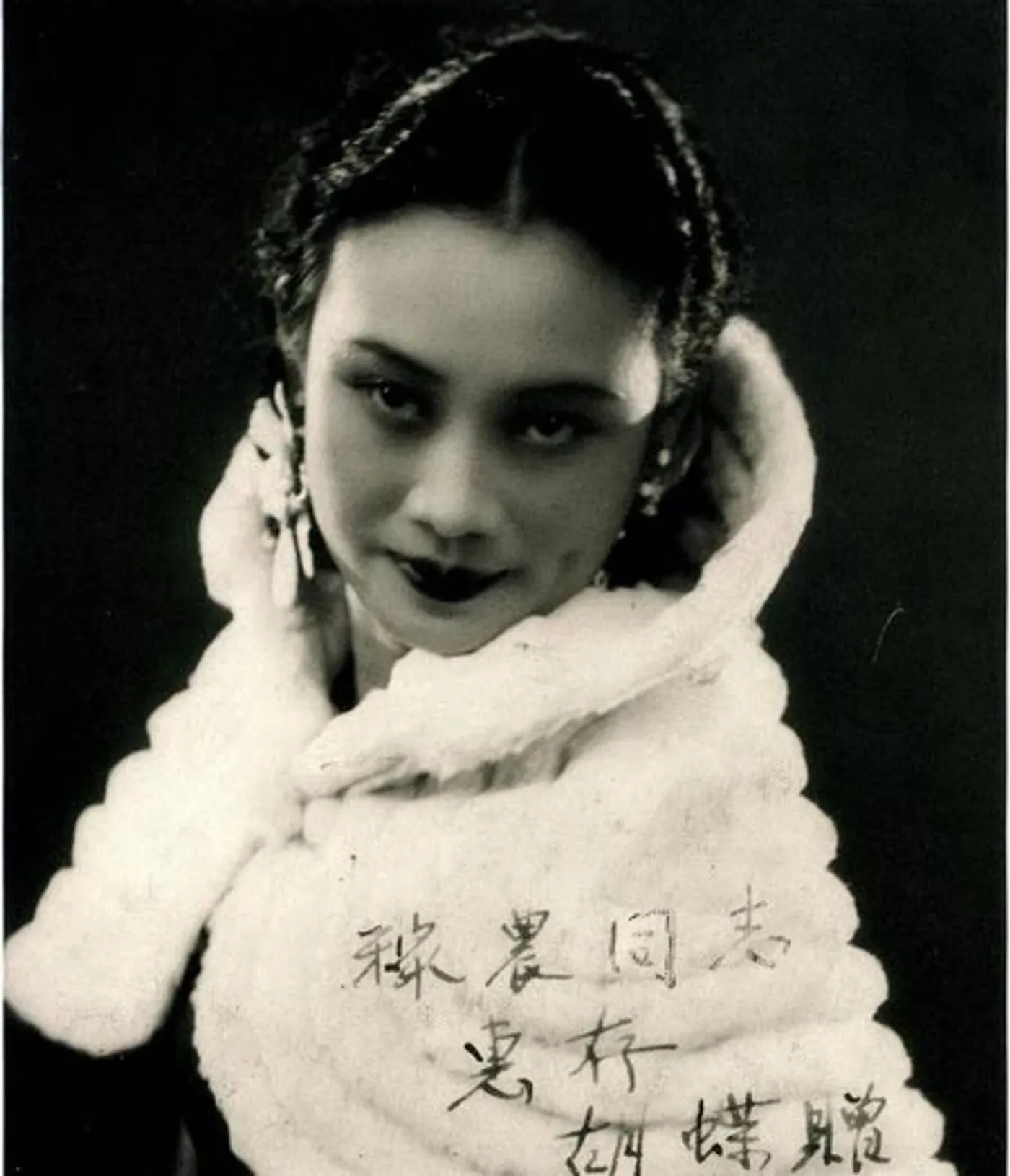
How wide was the gap between a star and the rest of the cast? Zhiwei Xiao reports that in the 1920s actresses usually received between one and four yuan for a day’s work. Among the monthly salaries he cites, at one end was Mingxing’s Hu Die, who earned around 2,000 yuan. At the other was Ai Xia, a member of the same studio’s regular cast, who received only a little over 100. Jin Yan, the star of rival studio Lianhua, known as the ‘king of cinema’, earned 320 yuan. The comparison tells us chiefly about the hierarchy of stars and the terms offered by different studios. It also shows what the film industry was competing with. According to Xiao, a dancer in a Shanghai entertainment venue could earn as much as 1,100 yuan a month in the 1930s. For some actresses, moving into club work was therefore financially attractive.7
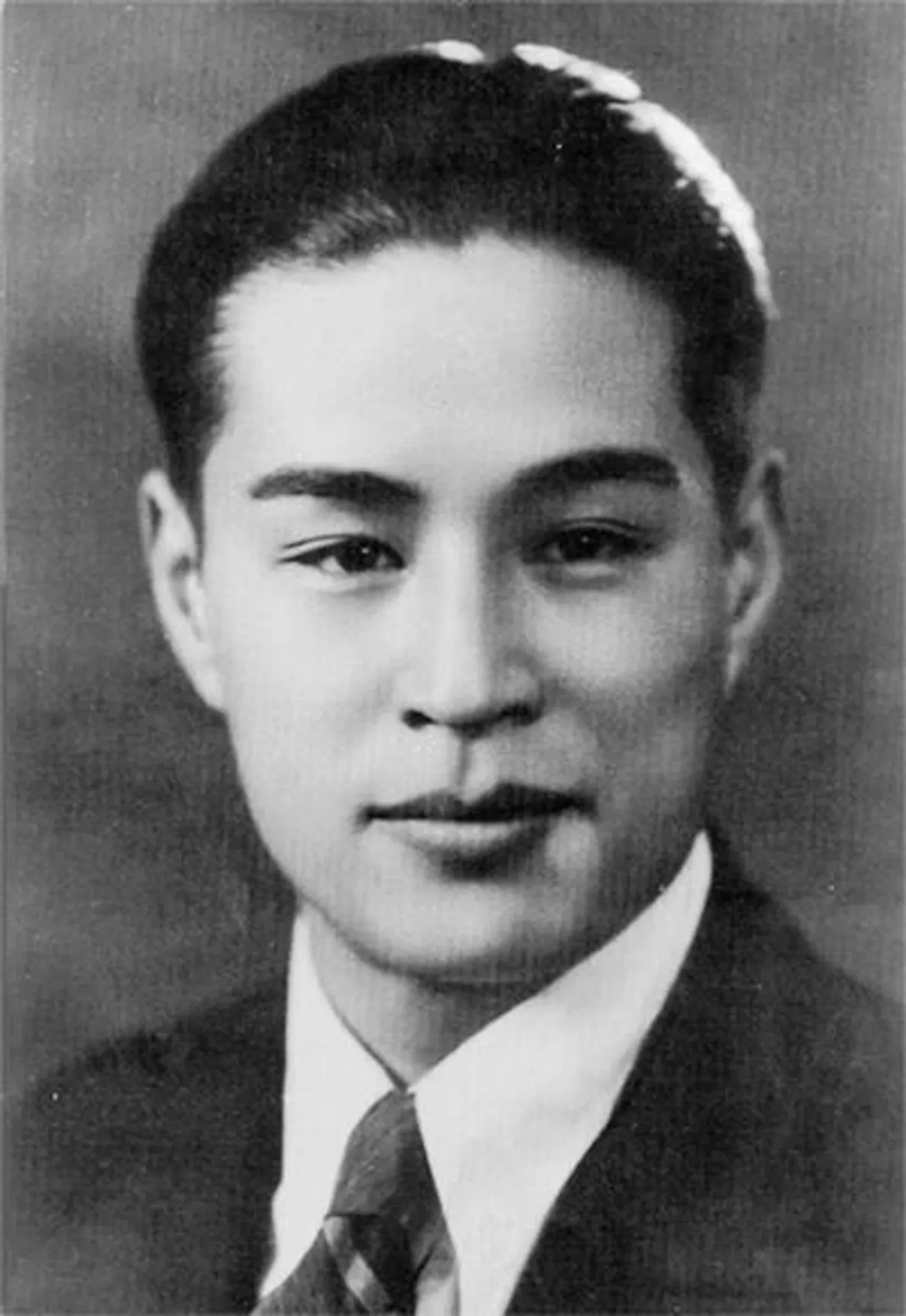
What, though, could one yuan buy? In Shanghai in the late 1920s and early 1930s, payments were made in silver-based yuan, also known as Chinese dollars. From April 1929 to March 1930, the city’s Bureau of Social Affairs tracked the budgets of 305 working-class families. The average household had just over four and a half members and spent 37.86 yuan a month, of which around 20.13 went on food and 3.15 on rent. One yuan thus covered roughly a day and a half of food for such a family. Four yuan would buy about six days’ food or more than cover the entire average monthly rent. In the second half of 1928, across thirty branches of Shanghai industry surveyed, a male worker earned an average of 20.65 yuan a month and a female worker 13.92. By these measures, Hu Die’s 2,000 yuan amounted to nearly a hundred months’ wages for a male worker, or more than four years’ expenditure for an entire working-class family.8
Cinema tickets provide another yardstick. In 1932, ten fen, or one tenth of a yuan, would get you into a screening at some Shanghai cinemas. At the cinemas in the survey that showed films after their first run, prices ranged from 20 to 40 fen. Some first-run cinemas charged 60 fen, while tickets for a foreign sound film at the most expensive venues cited cost between one and two yuan. One yuan was enough for five tickets at 20 fen each, and four yuan would buy twenty of those tickets or two tickets at two yuan apiece.9 A day’s work on set could therefore cover a sizeable expense in a worker’s budget. An actress’s income, however, depended on how often she was hired in a given month. Five days on set brought in between five and twenty yuan. A fixed salary, even one far more modest than Hu Die’s contract, improved an actress’s position simply because the payments were regular.
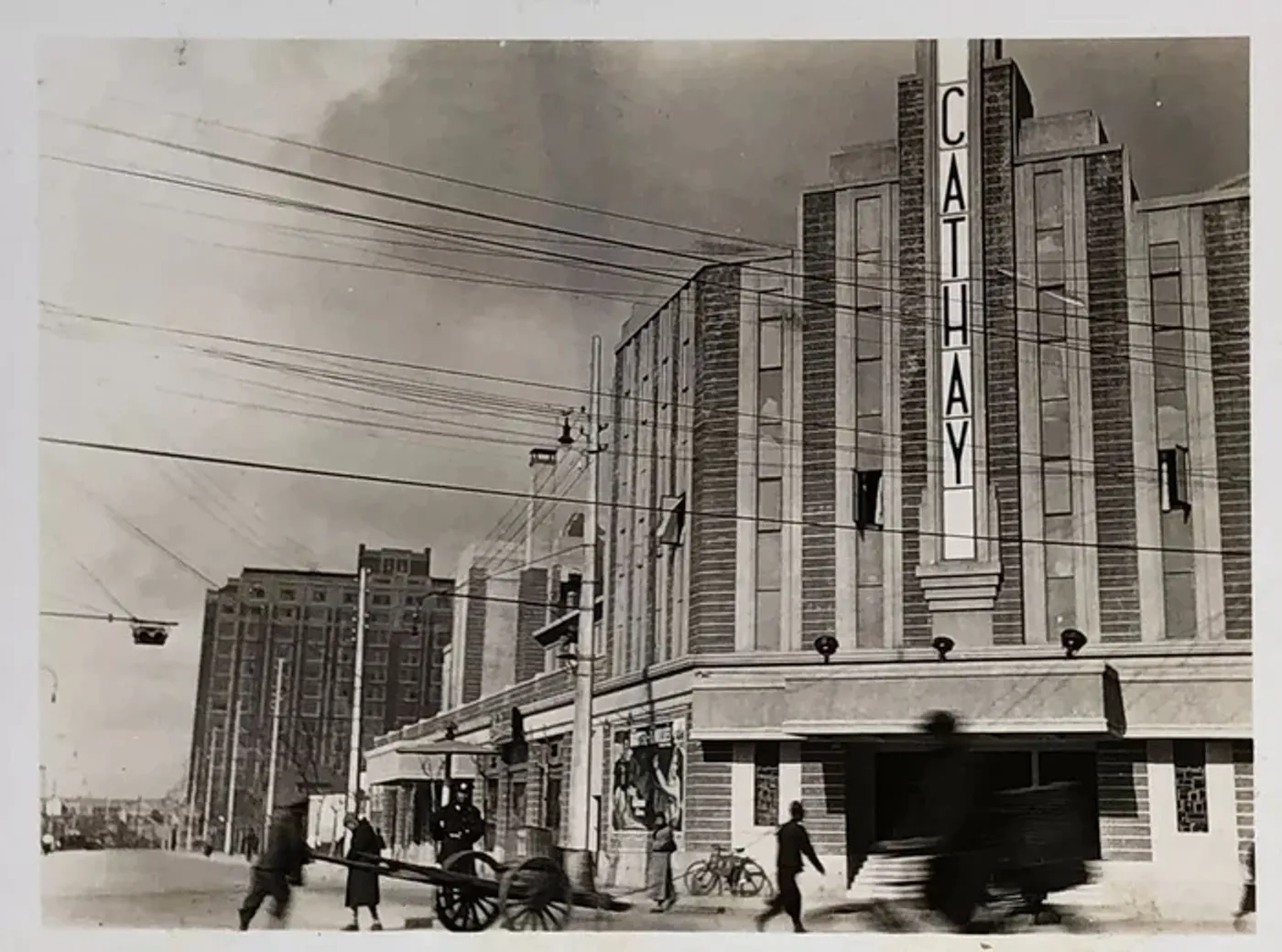
It also took the press to turn an actress into a star. Readers could see photographs of their favourites, read about their lives and have a say in how the stars ranked. When Hu Die won a poll to become ‘queen of the film stars’ in 1933, Linglong magazine was among the publications that took note. Stars were invited to ceremonies, their clothes became fashions to emulate and their names helped sell goods. The same pages that could hold up an actress as a model of elegance and independence gave editors the opportunity to judge her relationships and conduct.10 In post-war Hong Kong the studios developed this kind of press themselves: MP&GI published International Screen, and Shaw Brothers published Southern Screen.11 In 1930s Shanghai, the relationship between stardom and the press already mattered enough for Cai Chusheng to make it one of the subjects of a film starring Ruan Lingyu.
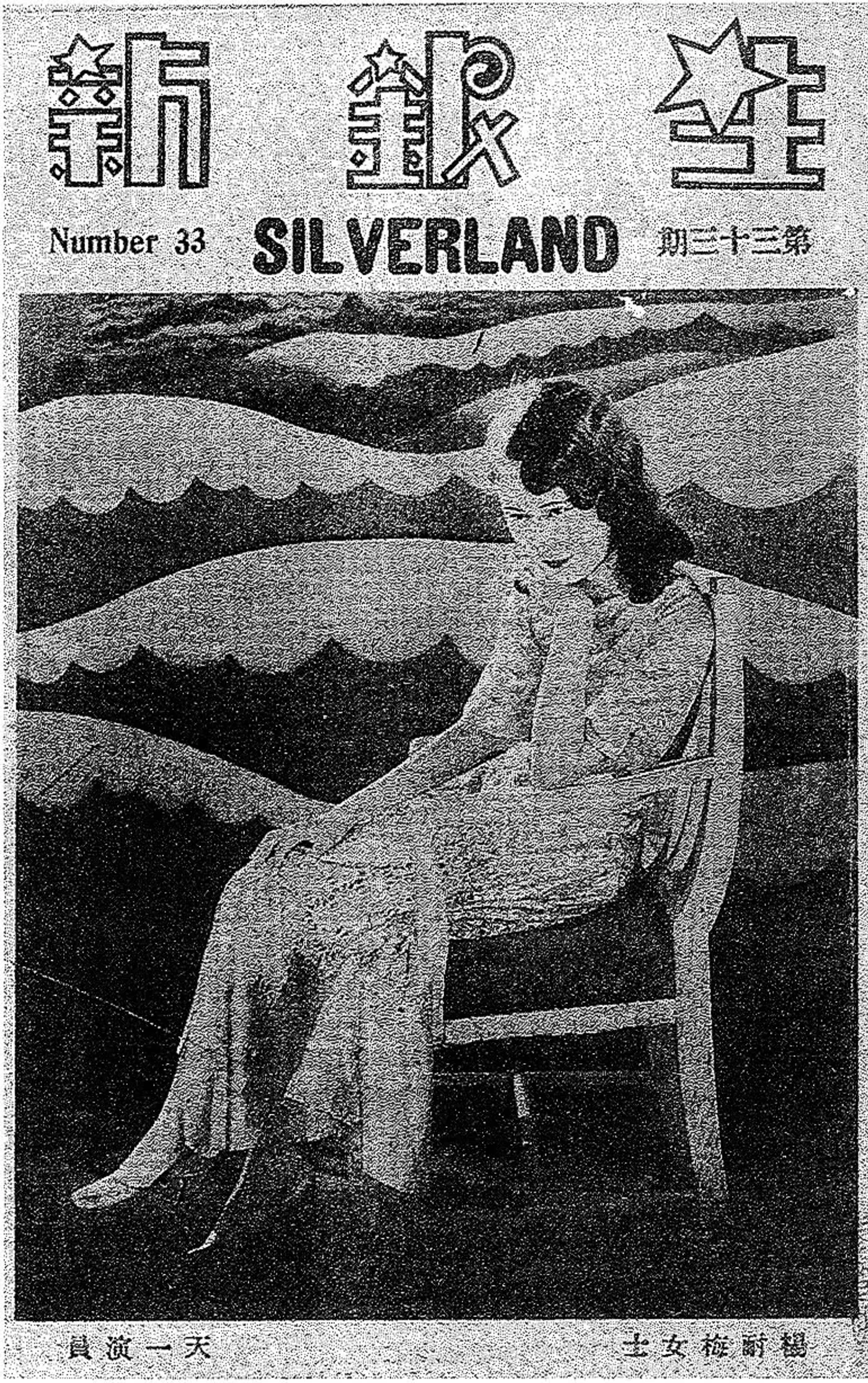
New Women (1935)
In 1933, Ai Xia appeared in A Modern Woman (Xiandai yi nüxing), for which she had written the screenplay herself. When she took her own life the following year, aged just 21, her fate inspired New Women (Xin nüxing). Sun Shiyi wrote the screenplay and Cai Chusheng directed the film. Ai had complained about the press’s excessive interest in her private life. The film also addresses economic dependence, sexual exploitation and the consequences of single motherhood. Like Ai, its heroine wants to make a living from writing.12
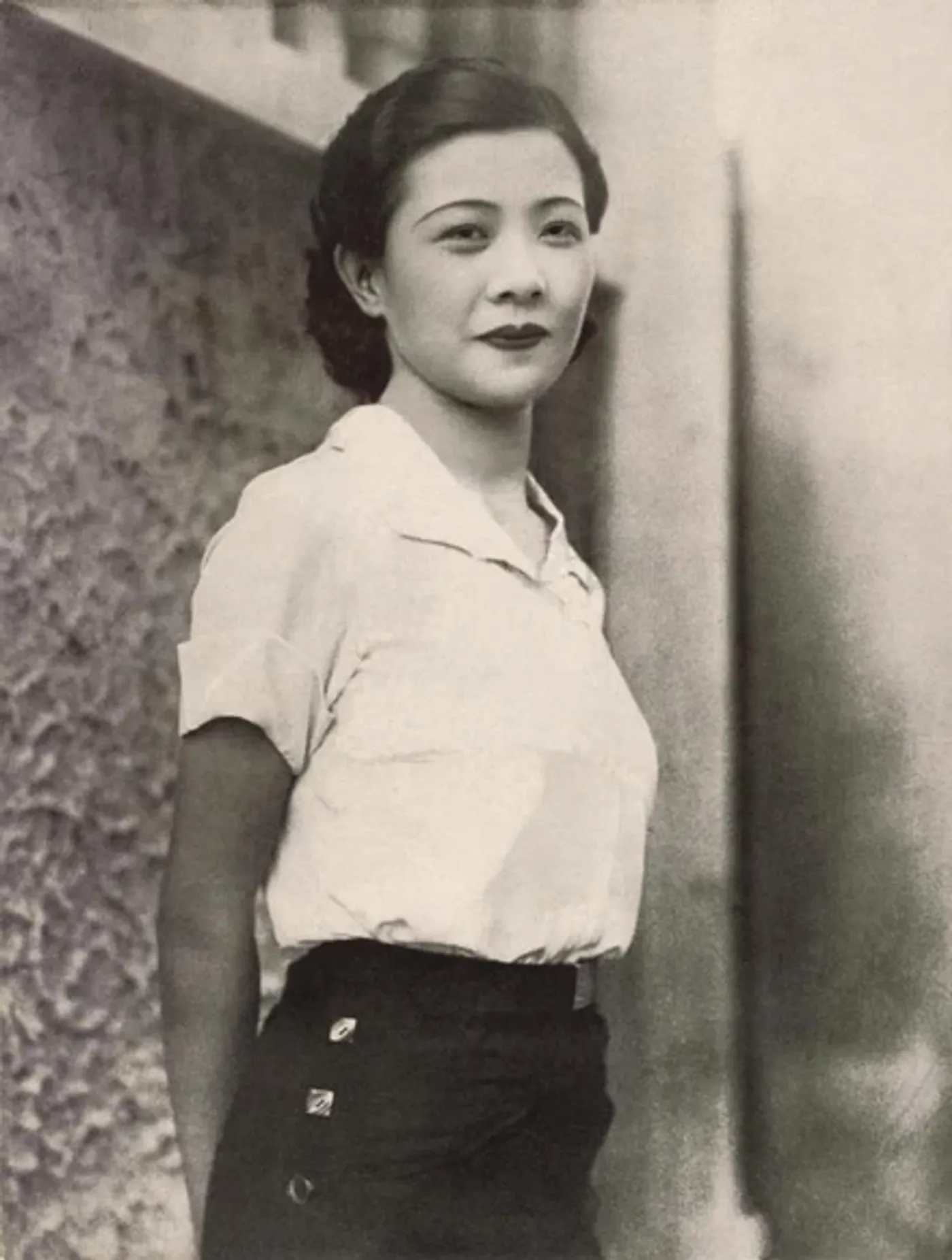
The Chinese title does not specify whether it refers to one ‘new woman’ or several ‘new women’. Hence the alternative English titles New Woman and New Women. Lianhua’s bilingual studio magazine initially advertised the film as New Female and presented it as a ‘problem film’ about ‘the woman question’. The campaign praised women who sought independence and attributed passivity to those who embodied the old order. In the same year, however, Lianhua also produced National Customs (Guofeng), also starring Ruan Lingyu. In that film, the model of a modern woman drew on the nationalist New Life Movement’s programme for personal conduct. Within a single studio, then, there were different answers to the question of how a modern Chinese woman ought to live.13
The question itself predated the Republic of China, established in 1912. As early as the late Qing, people debated women’s access to education and their right to make their own decisions about marriage. Before the republic was founded, He-Yin Zhen wrote about the relationship between women’s subordination and their economic circumstances. The Confucian ideal bound a woman’s life to the home. It was easier to live up to that ideal in a wealthy family than when one had to earn a living in a factory, on the land or in domestic service. In a city like Shanghai, paid work, expanding education and the popularity of the illustrated press opened up new possibilities, along with disputes over how much freedom a woman could have at work, in marriage and in public life.14
The Price of Independence
Wei Ming (Ruan Lingyu) comes to Shanghai, earns a living teaching music at a private girls’ school and writes for the press. Through her friend, the editor Yu Haichou (Zheng Junli), she tries to get her first novel, The Tomb of Love, published. She keeps it from her acquaintances that she has a daughter, who is being brought up by Wei’s older sister. Being known as a single mother could jeopardise her efforts to establish herself in the city. Meanwhile, Dr Wang (Wang Naidong), the husband of an old school friend, a member of the school’s governing body and a sexual predator, uses his position to get close to Wei. He takes her to a club, where he tries to take advantage of her disorientation amid the noise, lights and alcohol. When she rejects him, he has her dismissed.
Soon afterwards, Wei’s daughter, whom her sister has brought to Shanghai, falls gravely ill. The hospital demands 127.50 yuan up front for five days of treatment. For comparison, this amounts to more than three months’ expenses for a Shanghai working-class family in the survey cited earlier. Wei no longer has a regular salary and receives no advance on her novel. With no other way out, she eventually agrees to have sex for money, hoping to pay for the treatment. When Wang turns out to be her client, she flees. When he shows up uninvited at her flat, her friend and neighbour Li Aying (Yin Xu) comes to her defence.
When her daughter dies, Wei attempts to take her own life. By then, Wang has persuaded a journalist to smear her in the press, presenting her to readers as a prostitute and an unmarried mother. The reporter finds Wei while she is receiving help after the suicide attempt, sees the chance for an even more sensational story and arranges for her to be taken to hospital, where she dies. The publisher and the journalist decide to pay for the funeral so that they can present themselves as benefactors and sell more newspapers in the process. Wang, meanwhile, drives off with another mistress.
Photographs and Mirrors
On the drive to the club, the film already lets us see the city and Wang from Wei’s point of view. Wei sits on the right-hand side of the frame, and their first meeting plays out in a rectangle superimposed on the image, corresponding to the car window. Shanghai’s neon lights bring her back to the present. Only then does she notice that the doctor has put his arm around her. At the club, dazed by drink and the spectacle, she watches a dancer being whipped by a cowboy. Christopher Rea sees a resemblance to the cabaret act in Chaplin’s City Lights (1931). Cai takes the scene further, however, turning it into a hallucination. Wei sees herself in the dancer’s place, in chains. The moving lights, the editing and her growing disorientation convey her experience of an evening that Wang has arranged to exploit her vulnerability.15
In New Women, it is hard to miss how often Wei’s photograph appears on screen. It hangs above or beside her as she receives guests. The publisher takes an interest in the novel only after seeing a photograph of its author, while the magazine’s editors want to print her portrait alongside her writing. On the book cover, her name is preceded by ‘Miss’, which becomes part of her public image. The publisher can use her name and face straight away, but Wei will receive her ten per cent of the profits only once the book begins to sell.
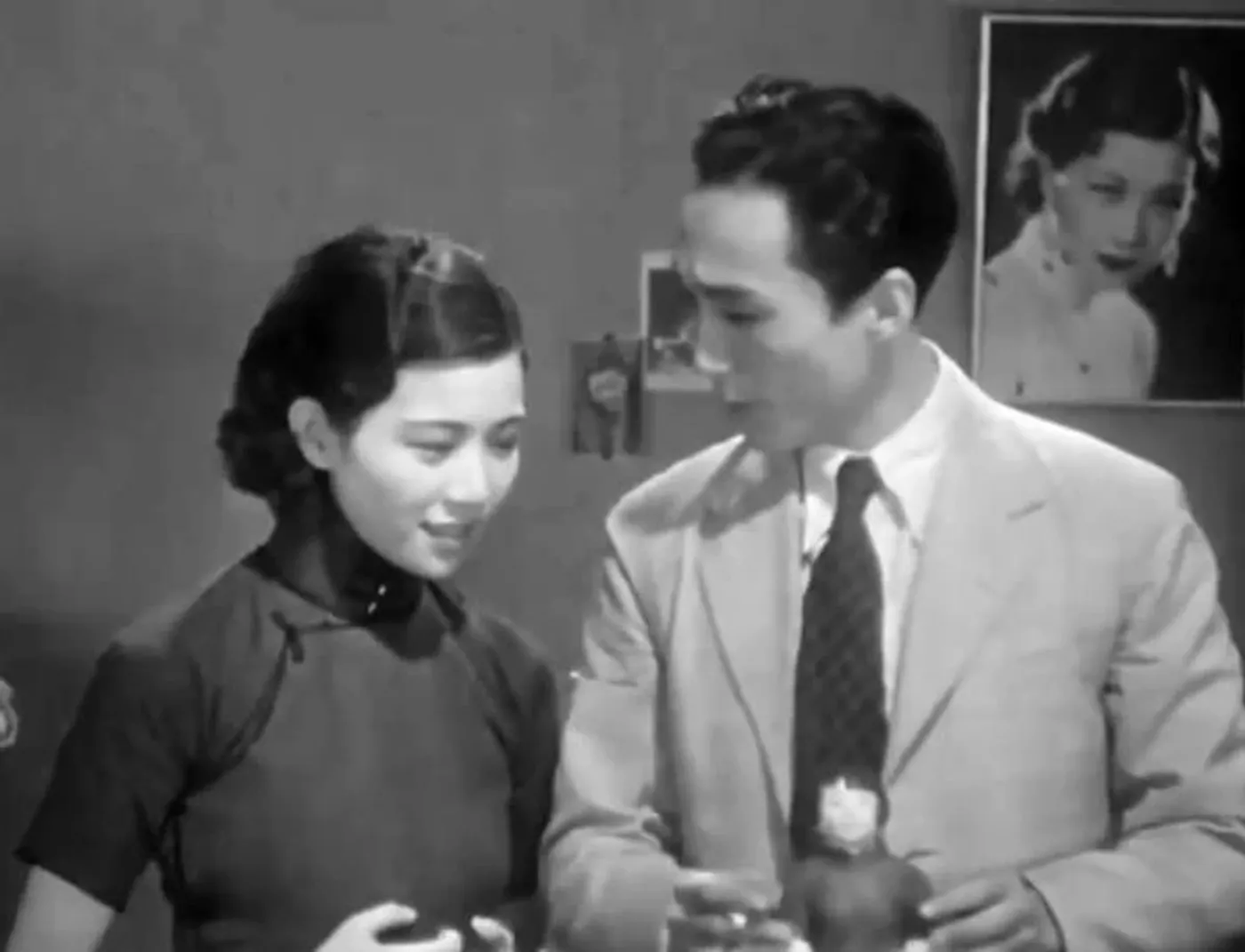
Wei thus leads two lives. In one, she writes, teaches music, falls in love and tries to raise a child. In the other, she is a flat image to which anyone can attach whatever story they please. In one scene, Mrs Wang pieces together a torn photograph of Wei that she has found. When she adds the piece with the eyes, the face begins to move and smile. The Shanghai press of the time had cast young women as fetish objects for male consumption. Hence the emphasis on Wei’s photographs in the newspapers and in the promotion of her writing. Whether she is published depends on her looks rather than her ability.
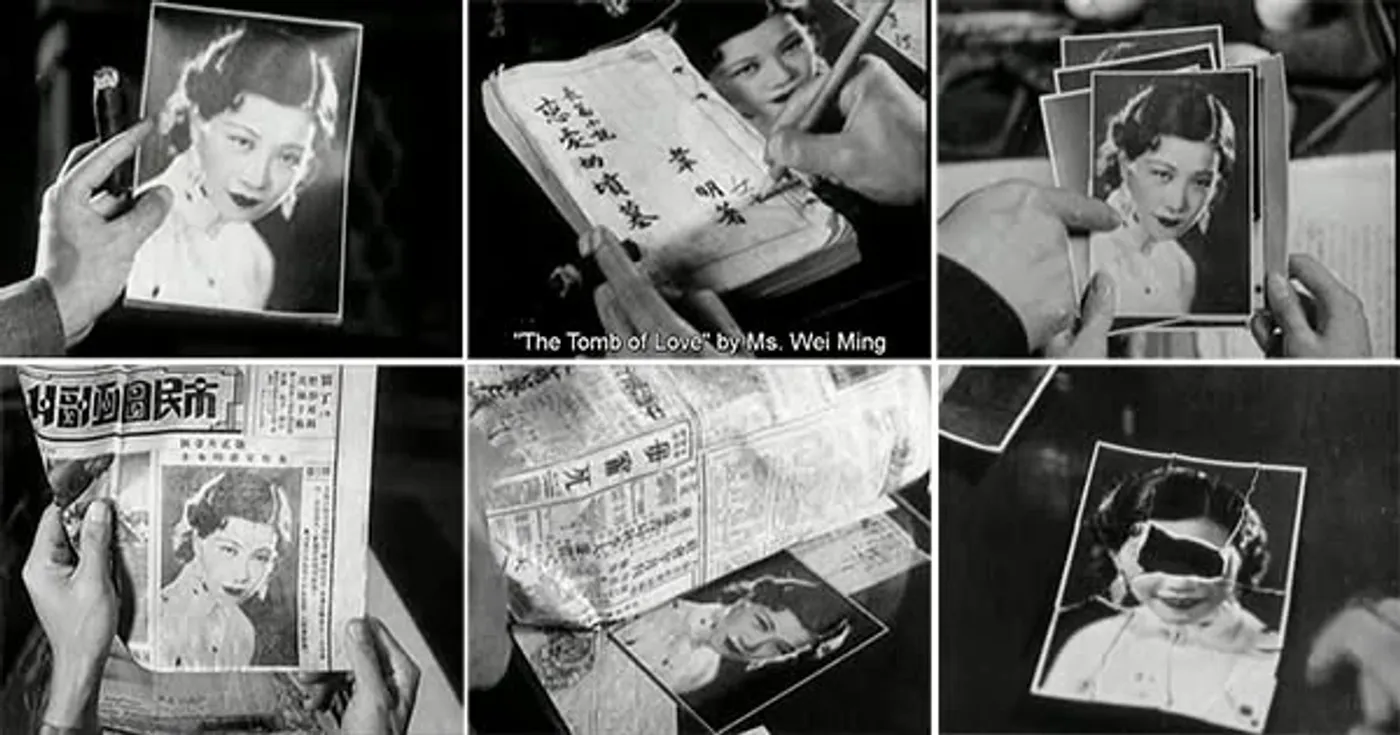
In the 1930s, women were seen in two ways: as consumers, buying clothes, cosmetics and the like, and as objects of consumption in their own right. If Wei wants to produce something herself, in this case a book, she must therefore make a concession and allow herself to be ‘consumed’, by giving the public access to at least some of her private life and to her image. This is not enough for the media or the men, however, and in the end they ‘devour’ her entirely. If she were not attractive, she would have no chance of making a name for herself in the first place. In the eyes of the public, a woman’s talent counts for nothing; it is her looks that matter.
Mirrors, meanwhile, let us see the same faces from another angle. Cai pairs a shot of Wei before a mirror with a shot of Wang making the same gesture in his flat. Elsewhere, the magazine editor looks at himself in one mirror, while another shows him trying to kiss Wei as she asks him for money. For Wei herself, the mirror is a place to express and discover feelings she keeps hidden. Living in an intolerant society, she has to pretend to be someone she is not. Yet when she looks in the mirror, and when others do, it shows her real, concealed sadness. In another scene, she looks at herself as she prepares to meet the client, while her sister watches through a window from an adjoining room. A close-up of Wei’s face follows as she forces herself to smile through her tears. As Rea notes, the camera takes the mirror’s place, and with it the audience.16 We see what that smile costs her. It is directed at us, too, as fellow consumers of her image.
Who Is the New Woman?
Mrs Wang, Wei’s old school friend, now insists on being called Wang taitai. Here taitai means ‘Mrs’ and signals that she is married. The film makes her something of a caricature of an affluent city woman who lives off her husband’s money and constantly reminds those around her of her standing. She grimaces at the sight of Wei’s flat, pointedly prefers her own cigarettes to the ones her hostess offers, and treats taking the bus as a sign of diminished status. She has a measure of security, then, but it depends on the stability of her marriage and on what Wang chooses to provide for her.
Li Aying, a disciplined and energetic factory worker, takes a very different path. She teaches the women at the factory singing, reading and writing. Cai contrasts the workers’ lesson with the night’s revelry at the club, using the image of a clock to mark the passage of time. On one side are people who can afford to amuse themselves until late. On the other are women who devote their free time to learning, presented as the future of the nation and set against the immorality of the big city. The difference between Wei and Aying is also apparent in the way the film portrays their characters. When Wang forces his way into Wei’s flat, Aying strikes him. Tilted shots, close-ups and movement towards the camera give her blows a force that can be felt on the other side of the screen. Li refuses to be dominated and emerges as a strong, modern woman, almost an ideal for the women in the audience to aspire to. Wei is weak, anxious about convention, too sensitive and naive. As such, she is destroyed by a cruel, unjust society. In one scene, lighting conveys their relationship symbolically. Aying steps forward, her shadow growing over Wei, who stands still, until it engulfs her completely.17
There is also the roly-poly doll Wei holds on the tram. It depicts a woman who rights herself each time she is knocked over. In the scene with the journalist, the toy stands in the foreground, Wei’s portrait hangs behind her, and she is between the two. Wong Ain-ling points out that the figure resembles Aying, with its sportswear and short hair. On one side, then, is a woman looked at for her beauty; on the other, a woman who always knows how to get back on her feet.18
The film clearly sides with Aying. Her strength has a class dimension, too. Wei seeks independence through her own work and talent, while Aying sees a chance for change in solidarity among women workers and in learning together. Yet if we follow the characters who reproach Wei for failing to persevere, it is easy to overlook how much she has already done. She earned her living, wrote, stood up to Wang and tried to find the money to save her daughter. The women themselves, after all, see a way to work together. Aying has written a song and wants Wei to compose the music, but the instrument is taken away to pay off debts. The project would have made room for the talent of one woman and the organising work of the other.
Wei Ming’s Voice
In hospital, Wei cries, ‘I want to live!’ The characters spring from her mouth and become part of the frame. Cai lets the dying woman speak directly to the audience after the newspaper has already told her story in its own way. Wei herself, who only a moment ago was ready to die, demands to be saved. Soon afterwards, however, we see Wang throw the newspaper announcing her death out of the car window, and women leaving the factory trample it into the mud. The song and the rhythm of their footsteps give the ending a new energy. The final shots place their hope in women who learn and work together. This raises the question of whether that community would also have had room for someone with Wei’s ambitions and sensitivity.19
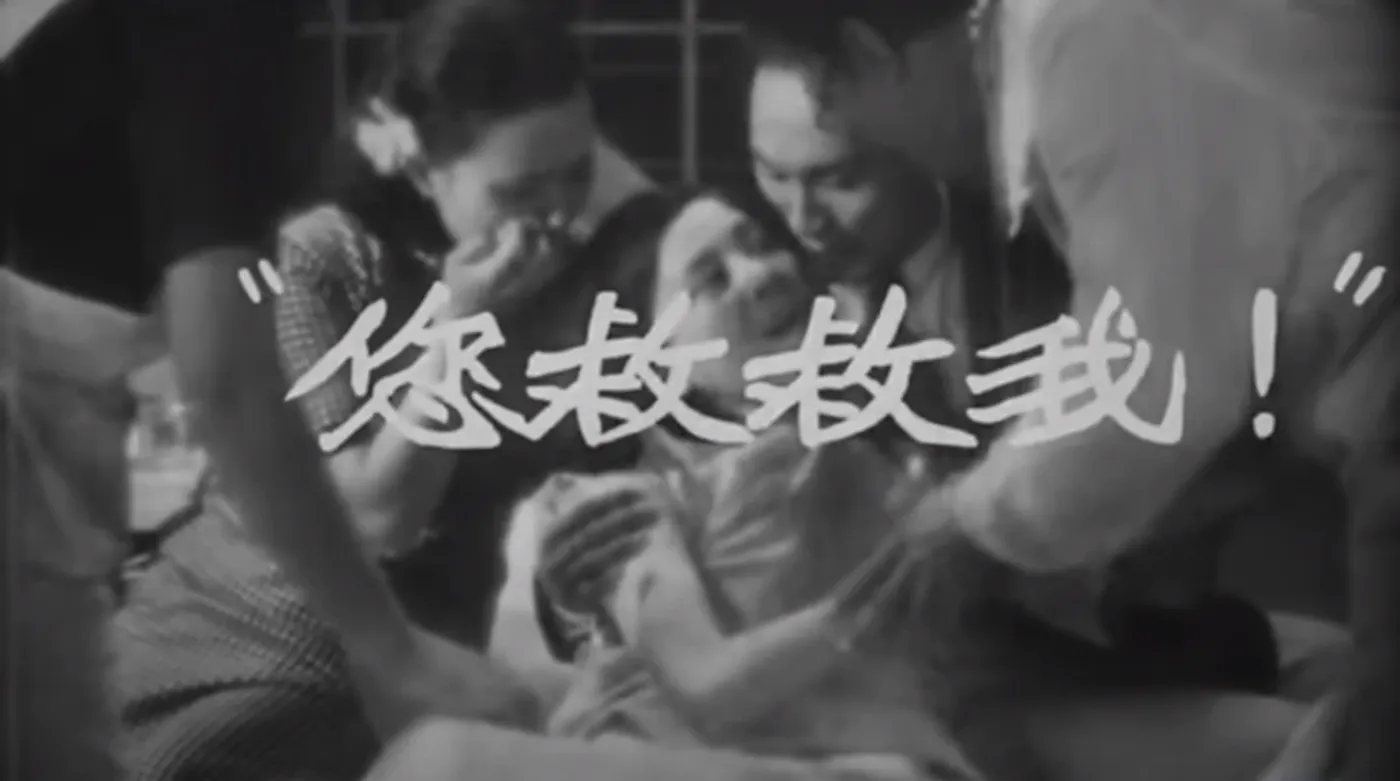
This scene shows the different means by which Chinese cinema in the mid-1930s could give a character a voice. New Women was shot without recording sound on set, with dialogue, effects, singing and music to be added later. Sound was recorded on separate discs, synchronised with the image during screenings. The film retained intertitles and acting that relied on facial expression, and at moments of particular tension the lettering itself could convey the force of a voice.20 Music is also tied to the work of both women. Wei teaches piano and Aying leads a choir of women workers. Aying wants to give the women lyrics of her own to sing to the tune the club patrons had been enjoying.
The film opened in Shanghai in early February 1935, during the Lunar New Year celebrations. As early as 27 January, radio listeners could hear its music played by an orchestra conducted by the composer Nie Er. The broadcast came from a Chinese-Western pharmacy, where a skin-lightening cream said to be used by Ruan Lingyu, who was present at the concert, was advertised. A film in which an author’s portrait is meant to persuade readers to buy her book was itself trading on the selling power of its star’s image.21
The portrayal of the press provoked a protest from Shanghai journalists, who demanded changes to the film and an apology from Lianhua.22 At the same time, newspapers were writing at length about Ruan’s private life. Her former partner Zhang Damin took her to court. At the time, the actress was living with Tang Jishan, who was accused of violence against her in one version of the farewell letters attributed to her. Ruan took her own life on 8 March 1935, International Women’s Day. She was 24. The published letters gave differing accounts of the circumstances of her decision. The saying 人言可畏 (rén yán kě wèi), ‘gossip is a terrible thing’, became associated with one of them. It is an old idiom that the dictionary of Taiwan’s Ministry of Education traces to the Book of Songs. Ruan’s case gave it a new association and brought it into public circulation. It is also worth recalling what Fei Mu, the director of the drama Life (1934), in which Ruan Lingyu played the lead, later said about the atmosphere at the studio. Her colleagues knew little about her life away from the set, and none offered to help her with the lawsuit.23
Ruan’s death brought a new wave of viewers to the film. In the way New Women was remembered, the tragic fates of Ai Xia and Ruan Lingyu became entwined with the fictional story of Wei Ming. Ruan herself also became a symbol of the Republic of China’s unfulfilled potential. An enlarged photograph of the actress was carried in her funeral procession. It was the same portrait that hangs on the wall of Wei’s flat in the film and was supposed to help sell her book. Many years later, Stanley Kwan returned to the actress’s life in the Hong Kong film Center Stage (1991). There, too, Ruan’s screen image moves between film and biography. Kwan juxtaposes scenes in which Maggie Cheung plays her with footage from surviving films in which we see Ruan herself.24
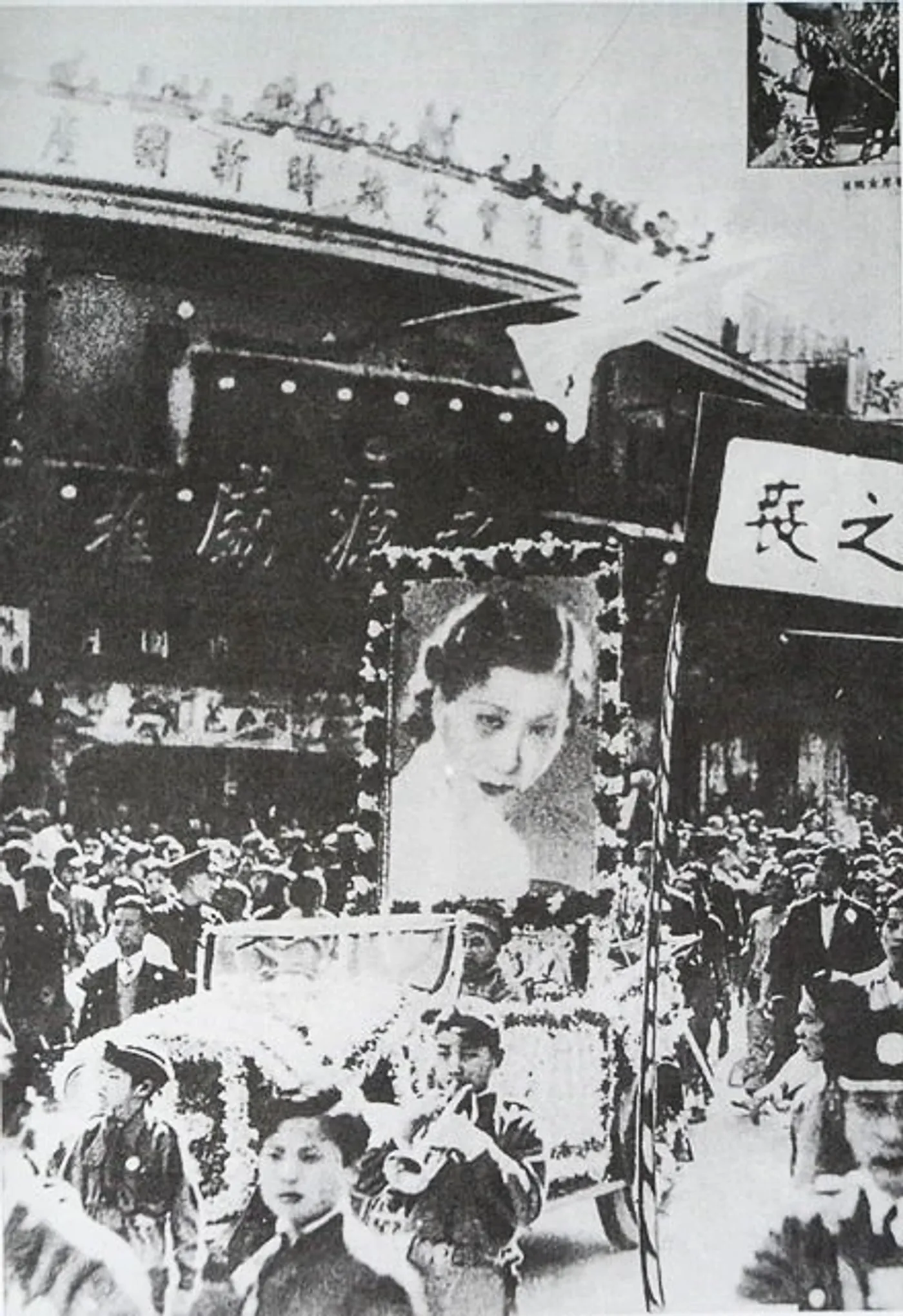
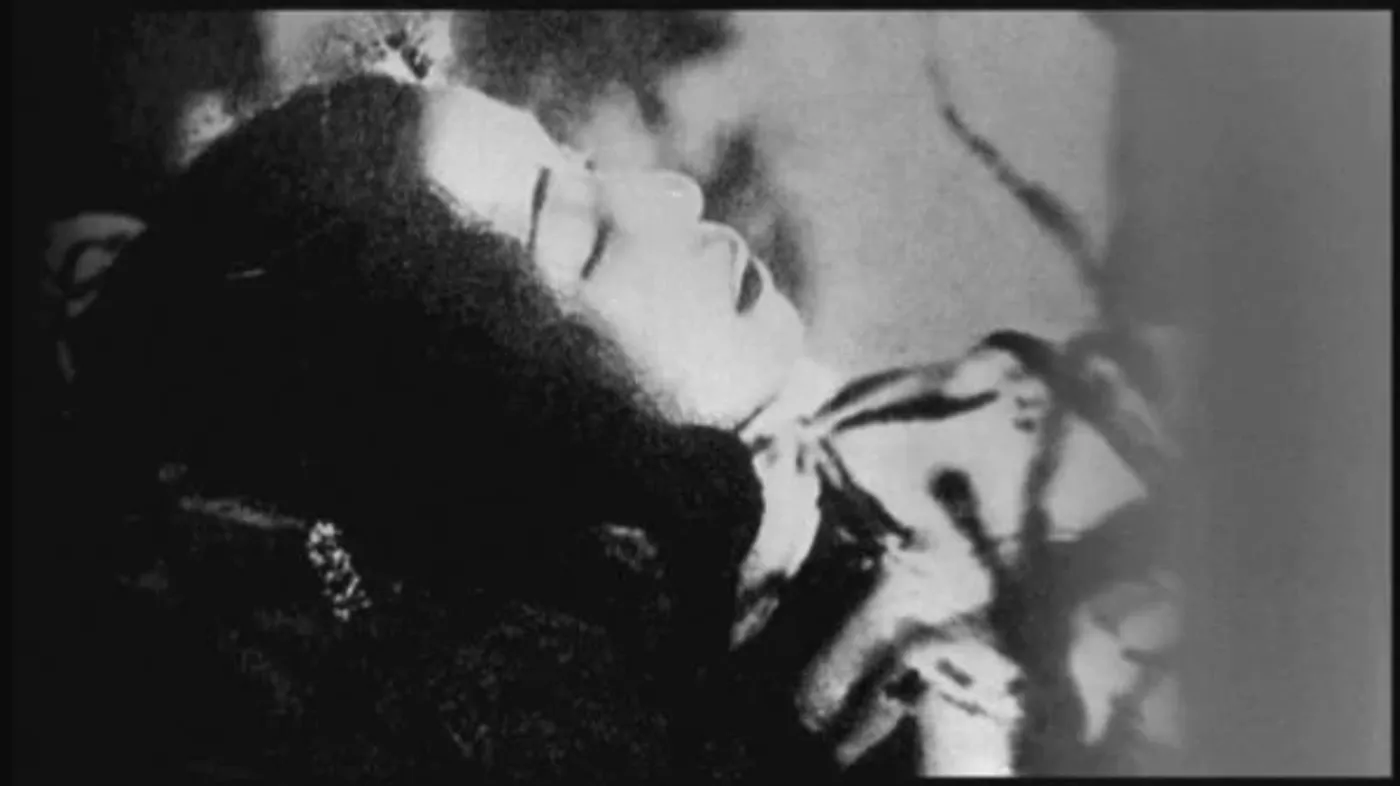
To be continued.
Notes
1. Hong Kong Film Archive, biographical note ‘Runje Shaw’. ←
2. Siyuan Liu, Performing Hybridity in Colonial-Modern China, Palgrave Macmillan, 2013. ←
3. Zhiwei Xiao, ‘Chinese Cinema’, in Encyclopedia of Chinese Film, ed. Yingjin Zhang, Routledge, 1998, p. 9. For a discussion of Zheng’s 1925 essay, see Jason McGrath, Chinese Film: Realism and Convention from the Silent Era to the Digital Age, University of Minnesota Press, 2022, ch. 1. ←
4. Xiao, ‘Chinese Cinema’, p. 9. On the prestige of Peking opera stars, see Joshua Goldstein, Drama Kings: Players and Publics in the Re-creation of Peking Opera, 1870–1937, University of California Press, 2007. ←
5. Han Cheung, ‘Taiwan in Time: The First Taiwanese Feature Film’, Taipei Times, 4 September 2022. Article. ←
6. Zheng Ji, Entertainment and Ideology in Shanghai’s Film Star Culture (1905–1936), doctoral thesis, University of Edinburgh, 2013, chapter on Hu Die. On the pay of regular cast members, see Xiao, ‘Chinese Cinema’, p. 9. Thesis in the university repository. ←
7. Zhiwei Xiao, ‘Chinese Cinema’, in Encyclopedia of Chinese Film, ed. Yingjin Zhang, Routledge, 1998, pp. 9–10. ←
8. The budget and wage figures are compiled by Zhang Zhongmin (张忠民), ‘近代上海工人阶层的工资与生活—以20世纪30年代调查为中心的分析’. See also the preface to the municipal Bureau of Social Affairs report Industrial Disputes (Not Including Strikes and Lockouts), Greater Shanghai, 1930. On the circulation of silver, see Debin Ma and Liuyan Zhao, ‘A Silver Transformation’, The Economic History Review 73, no. 2, 2020. Zhang’s article · Scan of the report · Ma and Zhao’s article. ←
9. Yingjin Zhang, Chinese National Cinema, Routledge, 2004, p. 16, table 2.2. ←
10. Linglong, no. 100, 1933, p. 80 in the issue viewer. Digitised page in the Heidelberg University archive. ←
11. Hong Kong Film Archive Newsletter, no. 28, May 2004, discussion of Hong Kong film magazines. Newsletter issue. ←
12. Christopher Rea, ‘New Women’, in Chinese Film Classics, 1922–1949, Columbia University Press, 2021, pp. 117–136, here pp. 117–119. Film resources at Chinese Film Classics. ←
13. Rea, ‘New Women’, p. 118. On National Customs, see the Le Giornate del Cinema Muto programme note. ←
14. Lydia H. Liu, Rebecca E. Karl and Dorothy Ko (eds), The Birth of Chinese Feminism: Essential Texts in Transnational Theory, Columbia University Press, 2013. See also Rea, ‘New Women’, p. 118. ←
15. Rea, ‘New Women’, pp. 119–123. ←
16. Rea, ‘New Women’, pp. 125–127. ←
17. Rea, ‘New Women’, pp. 127–131. ←
18. Wong Ain-ling, ‘A Woman Who Never Falls’, Hong Kong Film Archive Newsletter, no. 53, August 2010, pp. 14–15. Newsletter issue. ←
19. Kristine Harris, ‘The New Woman Incident: Cinema, Scandal, and Spectacle in 1935 Shanghai’, in Transnational Chinese Cinemas: Identity, Nationhood, Gender, ed. Sheldon H. Lu, University of Hawaii Press, 1997, pp. 277–302, especially p. 297. See also Rea, ‘New Women’, pp. 131–133. Harris’s chapter. ←
20. On the use of animated lettering, see Christopher Rea, ‘Animation and the Republican Chinese Film Industry’, 2021. Article in Animation and Contemporary Asian Societies. ←
21. Rea, ‘New Women’, pp. 117–119 and note 2 on p. 133. The film entry gives 3 February, while the chapter text gives 7 February, citing an opening advertisement in Shenbao on 7 February. The broadcast was announced in the same newspaper on 27 January 1935. ←
22. See ‘《新女性》侮辱記者’, Shenbao, 11 February 1935, p. 12, as recorded in the thesis 香消玉殞:民國女星阮玲玉之研究, and the headline of a report in Shijie ribao on 18 February 1935. Thesis bibliography · Headline of the report. ←
23. On the letters, see ‘Ruan Lingyu: The Goddess of Chinese Silent Cinema’, National Museum of Asian Art, and the discussion of the versions printed in 1935 in Huanqiu Renwu. Fei Mu’s remarks are quoted by Wong Ain-ling, ‘A Woman Who Never Falls’, p. 15. Museum article · Discussion of the letters · Entry for 人言可畏 in the dictionary of Taiwan’s Ministry of Education. ←
24. Jason McGrath, Chinese Film, ch. 1, figs 2a and 2b. On the effect of Ruan’s death on the film’s success, see Rea, ‘New Women’, p. 119. Photographs in McGrath · Center Stage at the Hong Kong Film Archive. ←
Bonus: How New Women Was Advertised
This is a Chinese press advertisement for New Women from Lianhua’s campaign. The studio’s name is printed at the bottom. The advertisement cites the success of Song of the Fishermen and announces a new film from the same director, placing it around the time of the release in 1935. The scan does not reveal the title or issue number of the publication.
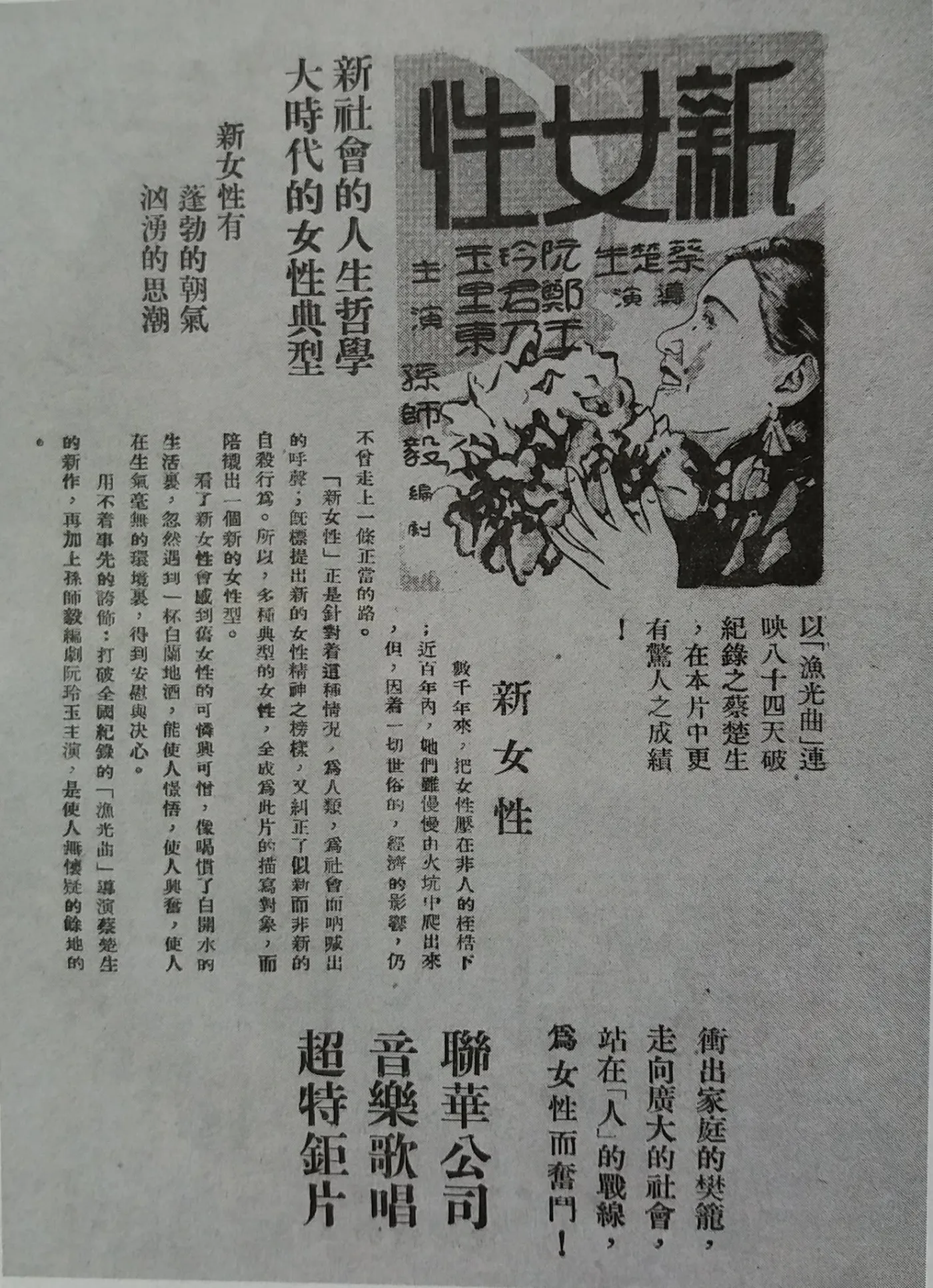
Translation of the Chinese Advertisement
New Woman
Directed by Cai Chusheng. Screenplay by Sun Shiyi. Starring Ruan Lingyu, Zheng Junli and Wang Naidong.
A philosophy of life in a new society. A model of womanhood for a great age.
The new woman has the vigour of youth and a surging tide of thought.
Song of the Fishermen ran for 84 consecutive days, setting a record. In this film, its director Cai Chusheng achieves an even more astonishing result!
New Woman
For thousands of years, women were held in inhuman chains. Over the past century, they have slowly begun to free themselves from this misery, yet custom and economic conditions still keep them from leading a normal life.
New Woman responds to this very situation. It is a voice raised on behalf of humanity and society. The film offers a model for a new way for women to live and challenges the suicidal gesture that is modern only in appearance. It shows different kinds of women so that the figure of the new woman stands out against them.
After watching New Woman, one feels sympathy and sorrow at the fate of women of the old order. It is as if someone accustomed to drinking boiled water were suddenly handed a glass of brandy. It opens the eyes and rouses the senses; in lifeless surroundings, it brings comfort and stiffens one’s resolve.
There is no need to praise it in advance. This is the new film by Cai Chusheng, director of Song of the Fishermen, which broke the national record, with a screenplay by Sun Shiyi and Ruan Lingyu in the leading role. With a line-up like that, there can be no doubt.
Break free from the cage of the home and go out into society at large. Take your place on the front line of the struggle for humanity, and fight for women!
The Lianhua studio. A grand spectacle with music and song.
Explanatory Notes
- New Women (新女性, Xin nüxing) – a film from 1935. The Chinese title can mean either ‘New Woman’ or ‘New Women’.
- Cai Chusheng (蔡楚生) – director of New Women and Song of the Fishermen.
- Sun Shiyi (孫師毅) – screenwriter of New Women.
- Ruan Lingyu (阮玲玉) – the actress who played the writer Wei Ming.
- Zheng Junli (鄭君里) – the actor who played the editor Yu Haichou.
- Wang Naidong (王乃東) – the actor who played Dr Wang.
- Song of the Fishermen (漁光曲) – Cai Chusheng’s 1934 film. The advertisement refers to the large audiences it drew.
- Lianhua (聯華公司) – the studio, also known by its English name United Photoplay Service, that produced both films.
The cast and the context of the campaign are confirmed by the China Film Archive catalogue and the resources of the Chinese Film Classics project.
Bonus 2: Three Lianhua Actresses
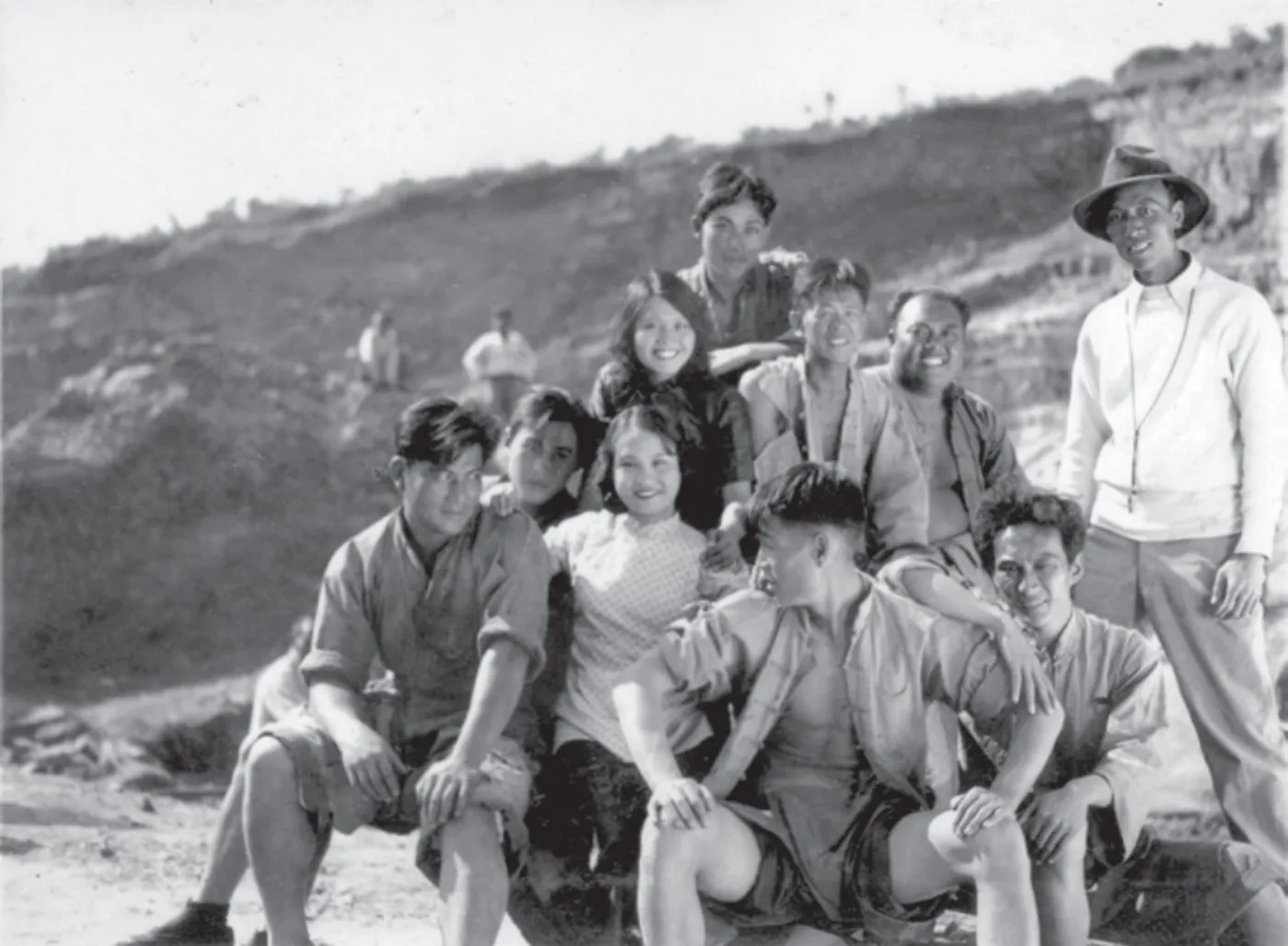
A Few Words About Lianhua
On one page of the company magazine Yingxi Zazhi, the actresses’ faces were set inside stars. The caption announced that Lianhua was on the march. It was 1931, and the studio wanted audiences to see its stars as people who were building Chinese cinema. Its programme declared respect for the performers’ individuality and promised to foster their talents and character alike. The idea was to win public respect for acting.
Lianhua, the studio behind New Women, was one of China’s biggest film companies in the 1930s. Its main studios were in Shanghai. One place where audiences could meet the actresses away from the screen was Lianhua Huabao, a magazine published from 1933. Its pages placed film stills alongside portraits of the stars and news of their lives. Readers could look at both the film’s heroine and the woman who played her. The thing was, the studio had its own ideas about how both should look. We can see this in the stories of Wang Renmei, Chen Yanyan and Li Lili, who all joined Lianhua in their teens.1
Wang Renmei
The cover of the 31 December 1933 issue of Lianhua Huabao featured two heart-shaped portraits. They showed Wang Renmei and Jin Yan, who were about to get married. The editors announced the wedding as a great event for Lianhua and for Chinese cinema as a whole. They wished for the couple to unite their talents in their work, too. The enthusiasm was hardly surprising: audiences had recently seen them as lovers in Sun Yu’s Wild Rose (1932).
Wang came from Changsha, and only a few years earlier she had planned to teach mathematics, like her father. After her parents died, however, she had to earn her own living. In 1928 she came to Shanghai with her brother and joined Li Jinhui’s music and dance troupe. When Lianhua took over the troupe in 1931, Wang went on to dance in films including Two Stars of the Milky Way. The lead role in Wild Rose gave her a chance to show what she could do in front of the camera outside a dance number. She played a spirited girl from the countryside who falls in love with a young man from a wealthy Shanghai family. Her ease on screen became her hallmark, and she acquired the nickname Wildcat. Even before her wedding, Lianhua Huabao presented her as a girl as mischievous as she was innocent, with all the energy and lack of inhibition of a child.2
Cai Chusheng’s Song of the Fishermen (1934) ran for 84 consecutive days at Shanghai’s Jincheng Cinema. The title song, performed by Wang, became a hit, and the film was honoured at the Moscow festival the following year. That makes it all the more surprising that Lianhua did not renew her contract. Wang left the studio in 1935. She recalled that management regarded her marriage as the end of her career. The students who had been rooting for the couple, she said, were euphoric at the news of their marriage.3
After that celebratory New Year cover, the magazine pictured Wang and Jin together twice in March 1934. On both occasions there was a third person with them. A photograph that emphasised their closeness appeared only in 1936, when Wang was already working outside Lianhua. The studio did have room for married women. Lin Chuchu, for instance, played mothers and wives there. Wildcat’s fame, though, had been built around the image of an unruly girl whom audiences could think of as a younger sister. The wedding made a good story for one cover. It was harder to keep telling the same story once she was a young wife.4
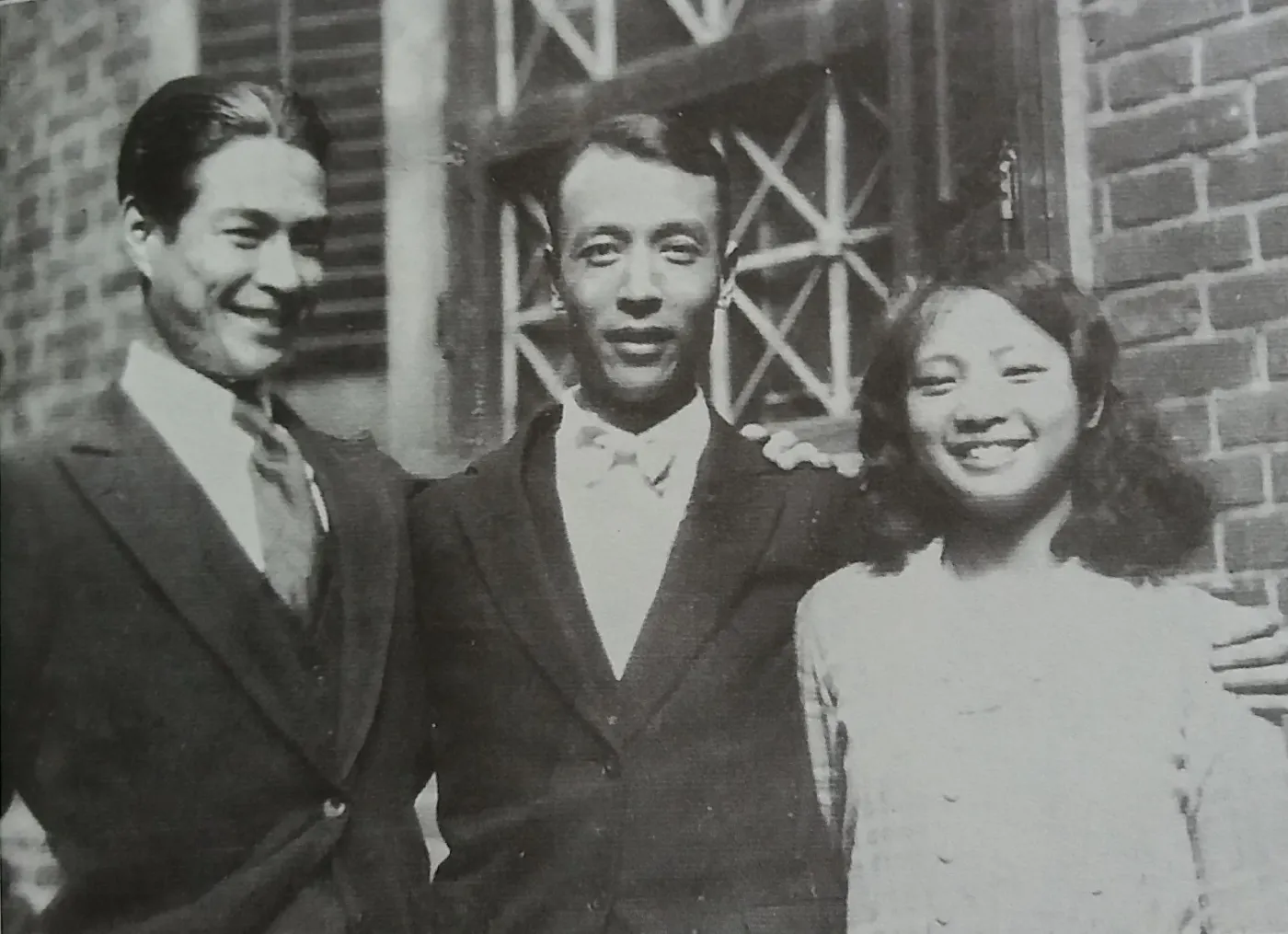
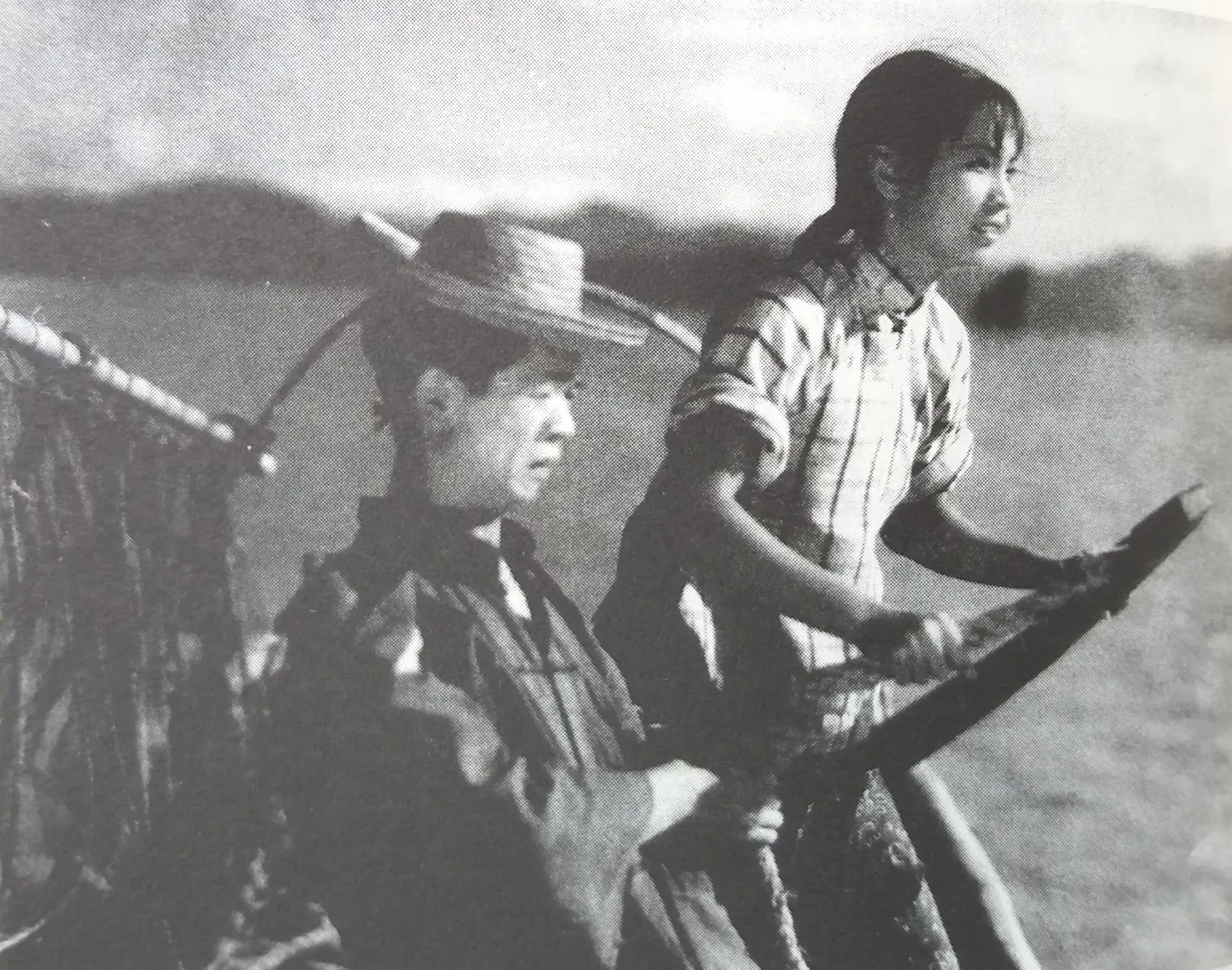
Chen Yanyan
When Sun Yu came to Beijing to shoot Memories of the Old Capital (1930), a fourteen-year-old film enthusiast turned up on set every day. She wanted to act in films and was offered a place at Lianhua. She still had to persuade her parents. They agreed on condition that she drop the family surname, keep family matters private and forgo her share of the inheritance. Her mother went with her to Shanghai. It was Li Minwei, one of the people in charge at Lianhua, who chose the stage name Chen Yanyan for her. She performed under that name throughout her career.
She began with small roles. Her first lead came in Cai Chusheng’s Southern Spring (1932), and before long she was known as ‘the Swallow of the South’. Another nickname, Little Bird, stuck as well. Over the following years she often played daughters and wives-to-be, and audiences saw her in a family setting. Lianhua Huabao liked to show her in Chinese dress. Sometimes she wore a fashionable qipao, sometimes simple country clothes. In Song of China (1935), audiences saw her alongside Lin Chuchu, who played her mother. In each of these guises, she looked like a girl a family would be glad to have at its own table. This was how Lianhua made the case that a career in acting could be reconciled with what was expected of a good daughter and fiancée.5
Among the Lianhua Huabao covers from 1935 to 1937 examined by Anne Kerlan-Stephens, Chen appeared eight times, or on roughly one cover in six. When an admirer wanted to write to her, the editors explained that she lived on the studio premises and that he should send the letter to the company’s address. In private, Chen became involved with Huang Shaofen, a cinematographer at the studio. According to the account quoted by Kerlan-Stephens, they were unable to formalise their relationship for years. She points to Chen’s youth and suggests that management may also have worried about what marriage would mean for the career of one of its biggest stars. Audiences regularly saw Chen play a fiancée. Her own plans to marry, however, had to wait.6
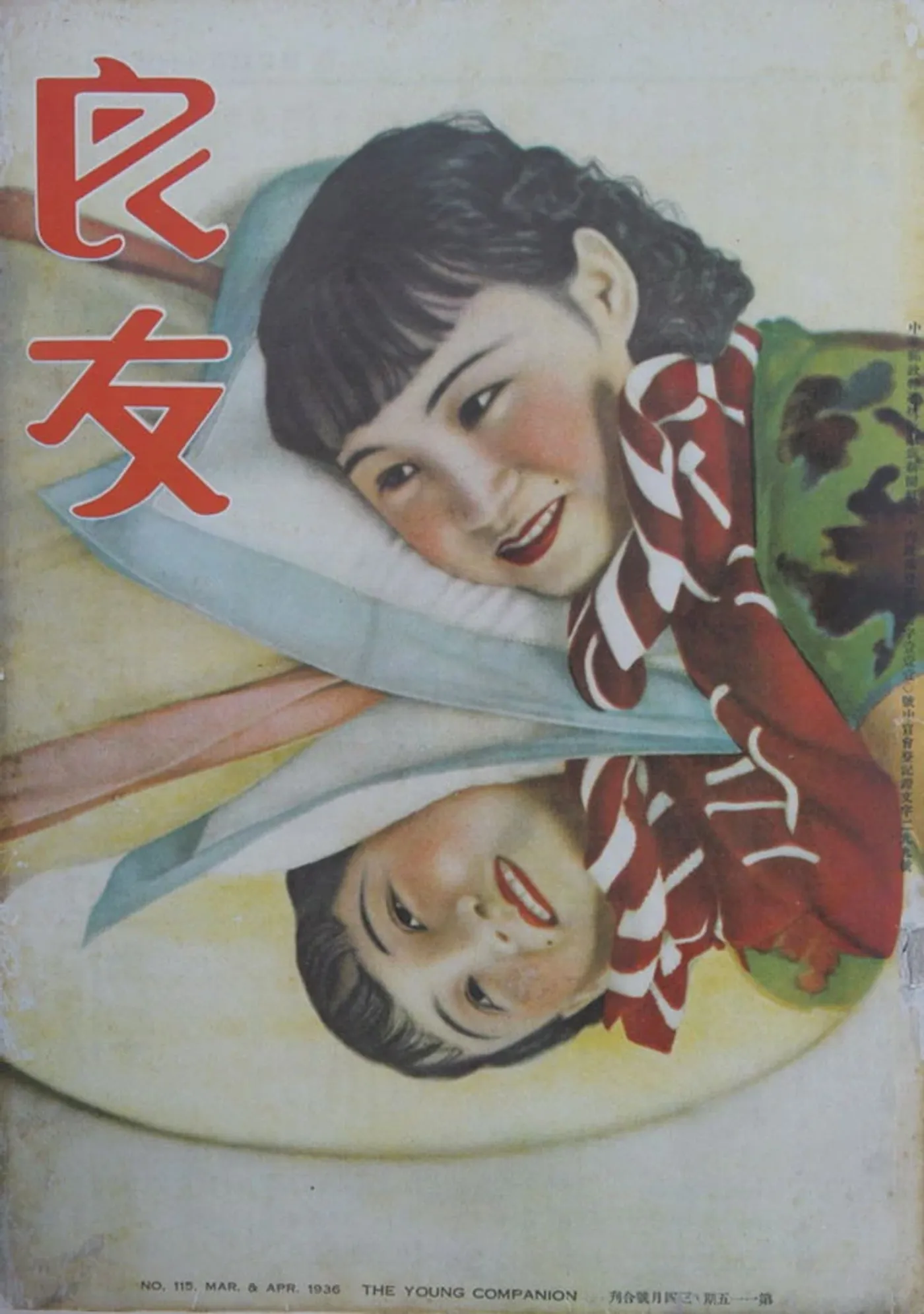
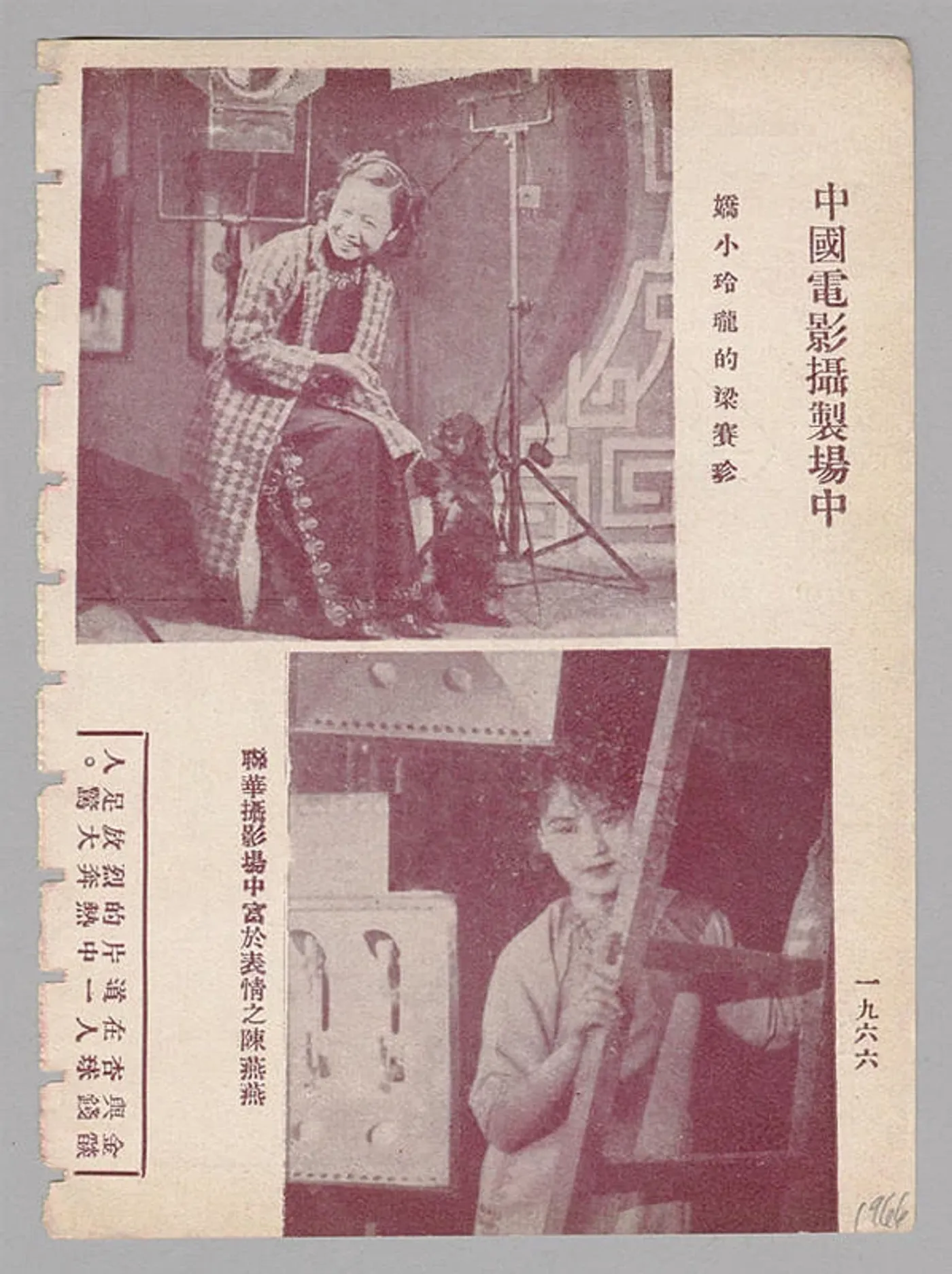
Li Lili
Li Lili, like Wang, came to Lianhua from Li Jinhui’s troupe and appeared as a dancer in Two Stars of the Milky Way. She had previously been called Qian Zhenzhen. Li Jinhui took her into the troupe and later adopted her. Her dance training proved useful on screen, for instance in Sun Yu’s films. In Sports Queen (1934), she played a girl who enrols at a sports school and becomes a track star. Off set, Li swam, played basketball and studied English with Wang. With new roles came pay rises. According to her memoir, she started on 50 yuan a month and by 1937 was earning up to 1,000. Payments could be late, though.7
Li’s memoir includes a photograph of her by a pool in a swimsuit. The editors of Lianhua Huabao preferred to emphasise something else. In one photograph, the actress rests her head on her hands and smiles at the camera. The caption jokes that she is tired and about to fall asleep right there. In other issues, the outfits, hairstyles and poses changed, but the editors kept coming back to her smile. When they showed Li’s athletic side, it was in photographs connected with her films. In Sun Yu’s work, the way she moved could become the subject of a scene in its own right, as when the camera followed her on the running track.
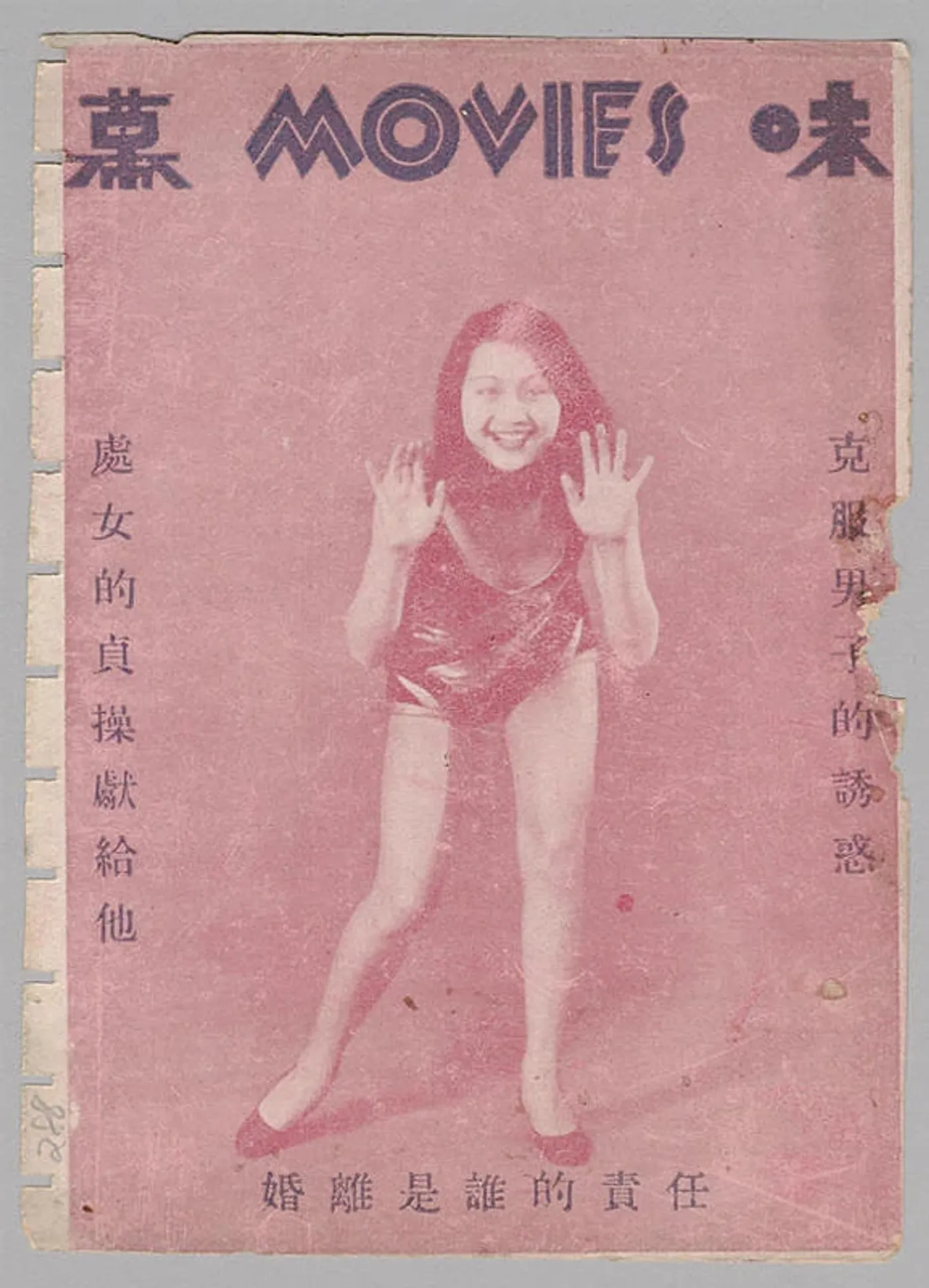
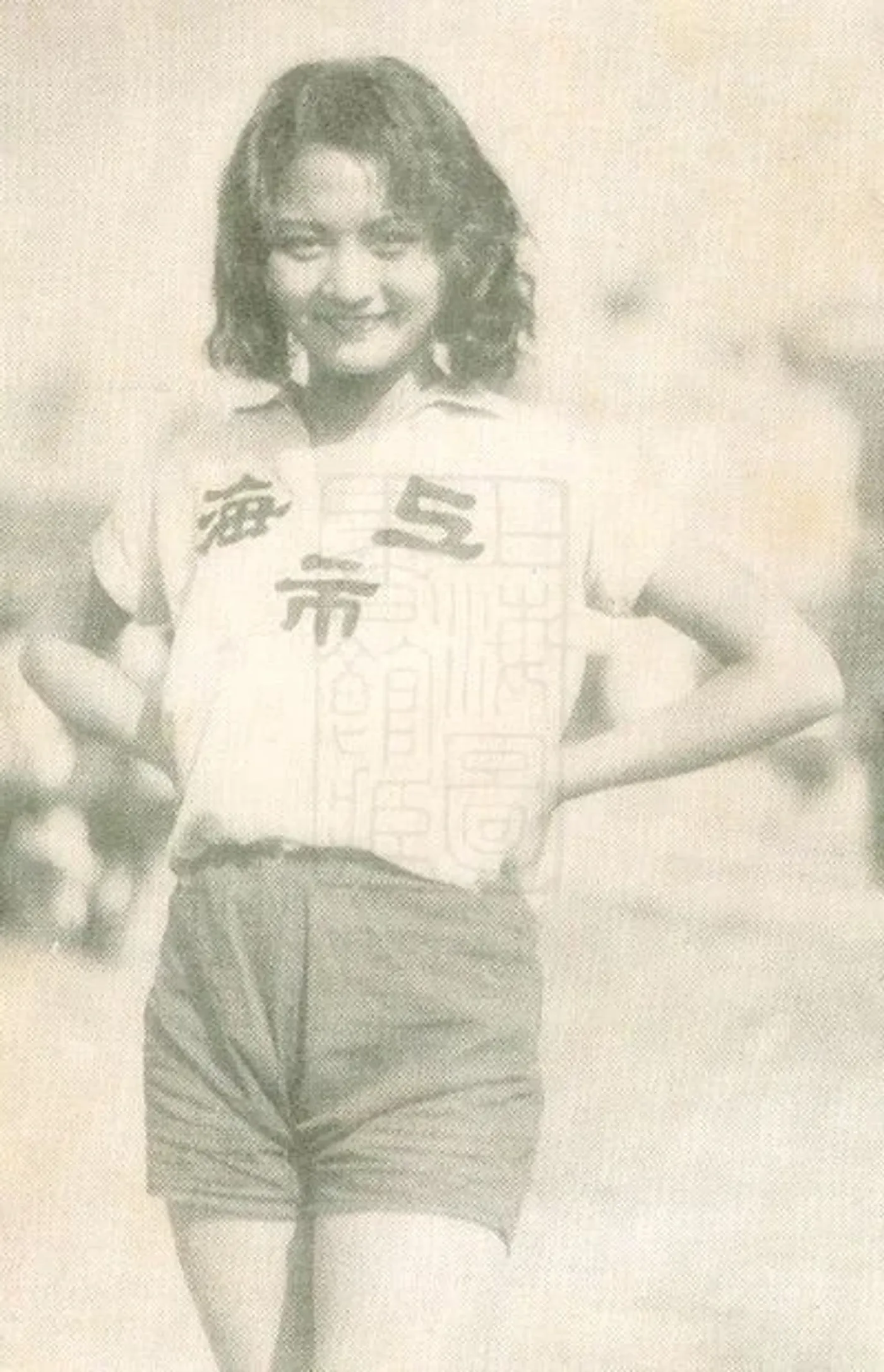
In Daybreak (1933), Li’s smile takes on another meaning. She plays Lingling, a girl who comes to the city from the countryside, works in a factory, suffers violence and ends up in prostitution. In time, she learns to use clothes and make-up to transform herself into an elegant courtesan. This gives her some control over what others see in her. Sentenced to death for helping a relative involved in revolutionary activity, she faces the firing squad with a smile. In New Women, Wei Ming has to smile through her tears to receive a client. Lingling’s smile, here, can be read as one last gesture she chooses for herself.8
In The Great Road (1934), Sun Yu cast Chen and Li as friends who try to free imprisoned workers. Li’s character, dressed in an elegant dark qipao, distracts the traitor while Chen’s lets the prisoners out. Both take a risk, but only Chen’s character comes out of the story alive. Kerlan-Stephens points out that Chen’s character has a father and is close to getting engaged, while Li’s is a refugee without a family. In the rescue scene, Sun Yu makes use of precisely what is hard to capture in a single portrait of Li. The traitor is meant to believe that she is interested in him. What the audience sees is how skilfully the actress feigns that interest.9
Notes to Bonus 2
1. This article is based on Anne Kerlan-Stephens, ‘The Making of Modern Icons: Three Actresses of the Lianhua Film Company’, European Journal of East Asian Studies, vol. 6, no. 1 (2007), pp. 43–73. On the studio and its publications, see pp. 49–51 and 65–66, fig. 9. DOI 10.1163/157006107X197664. ↩
2. Kerlan-Stephens, pp. 52–54, figs. 1 and 2. The issue of 31 December 1933 announced the wedding for New Year’s Eve. Chinese Film Classics dates the marriage to 1934 in its entry on Wild Rose. Film entry. ↩
3. Kerlan-Stephens, pp. 52–54. She quotes Wang Renmei’s memoir, Wo de chengming yu buxin, Shanghai, 1985, pp. 153 and 155. ↩
4. Kerlan-Stephens, pp. 55–56, figs. 3a, 3b and 4. ↩
5. Kerlan-Stephens, pp. 57–60, figs. 5, 6a and 6b. ↩
6. Kerlan-Stephens, pp. 58–59. She quotes the reply to the reader’s letter from the 16 June 1936 issue of Lianhua Huabao. ↩
7. Kerlan-Stephens, pp. 61–63. The figures for her salary and the details of late payments come from Li Lili’s memoir, Xingyun liushui: Huiyi, zhuinian, yingcun, Beijing, 2001. ↩
8. On the photographs and Daybreak, see Kerlan-Stephens, pp. 62–64, figs. 7, 8a and 8b, and pp. 68–71. Here she draws on Miriam Hansen’s interpretation in ‘Fallen Women, Rising Stars, New Horizons: Shanghai Silent Film as Vernacular Modernism’, Film Quarterly, vol. 54, no. 1 (2000), pp. 10–22. ↩
9. Kerlan-Stephens, pp. 66–67, under the title The Road. The film was made in 1934 and premiered on 1 January 1935. Chinese Film Classics entry for The Great Road. ↩